


“Green” – From Slogan to a Measure of Urban Value
In recent years, “green planning” has become a familiar keyword for any urban area in Ho Chi Minh City. Every project boasts lakes, parks, and tree-lined streets. But “green” is not just the color on a rendering – it must be a living ecosystem capable of adaptation and sustainable operation.
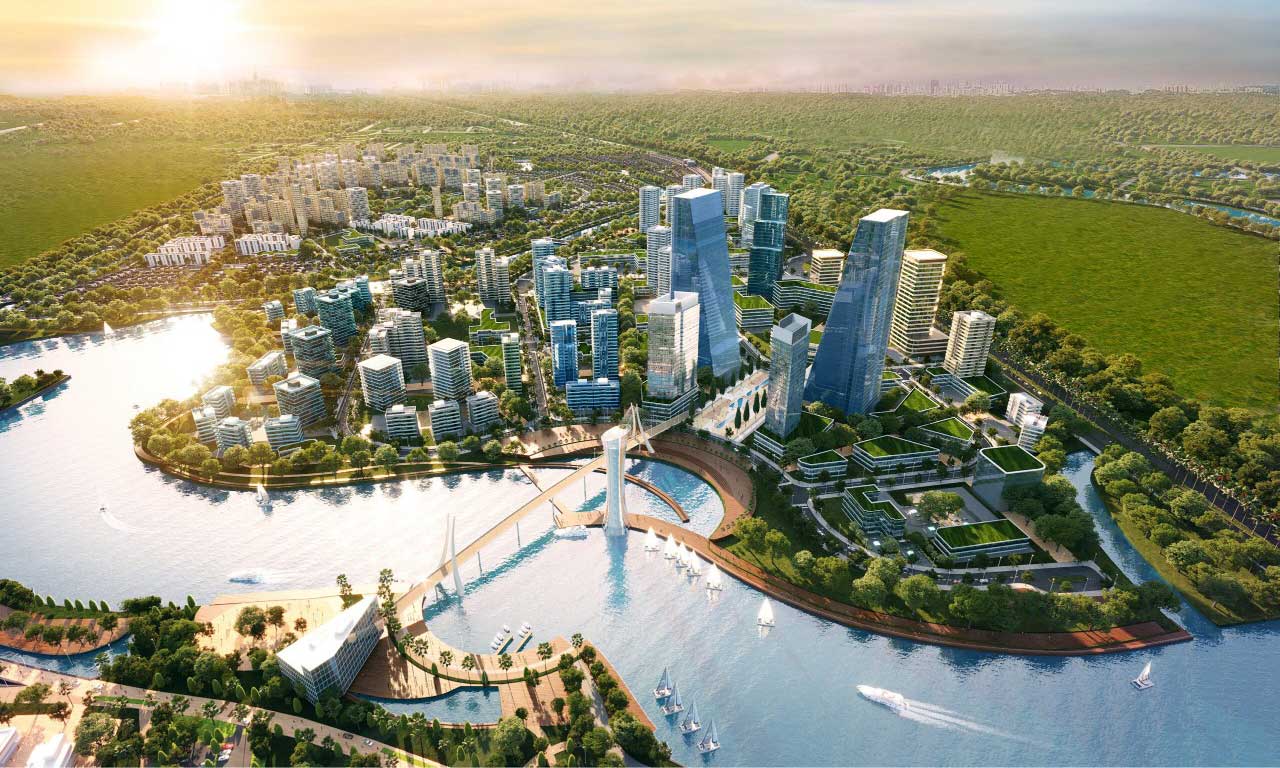
Zeitgeist City (Nha Be) – the mega-city developed by GS E&C (South Korea) – is attracting significant attention due to its scale of nearly 350 hectares, where over 40% of the area is dedicated to greenery and water surface. But amidst climate change and increasingly severe flooding in HCMC, the question arises:
Green Index: 27 m² of Greenery/Person – Is the Number Enough?
According to the approved master plan, Zeitgeist City has an average construction density of 30%, significantly lower than central urban areas (typically 45–50%). On average, each resident here benefits from 27 m² of green space per person – far exceeding the World Health Organization (WHO)'s minimum recommendation of 10 m²/person.
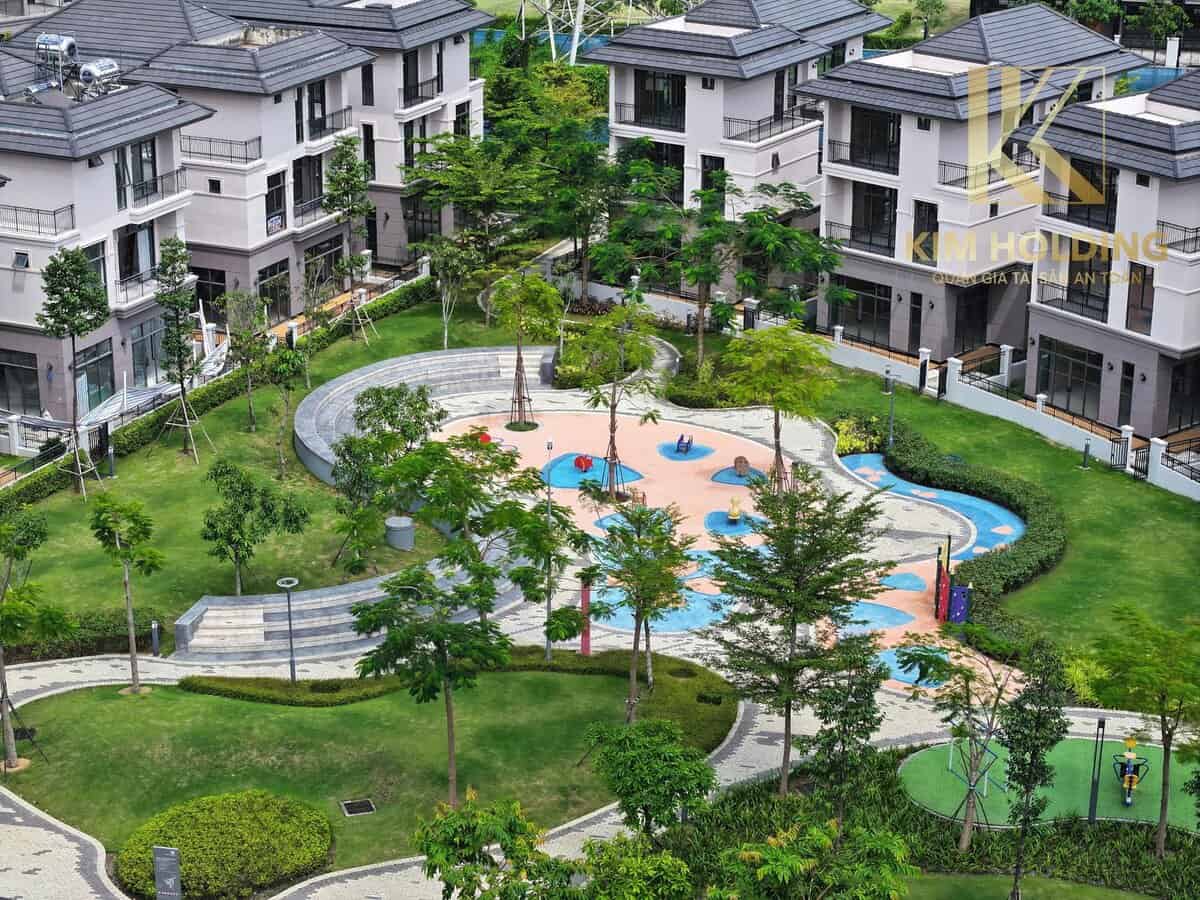
The project's green space is designed across 3 layers:
-
Ground-level greenery (linear parks, squares, walking gardens).
-
High-level greenery (green patches on roofs and loggias).
-
Regulating water surface (landscape lakes combined with rainwater reservoirs).
This helps reduce the average surface temperature by 2–3°C, while simultaneously increasing soil permeability by up to 70%, according to the engineering model published by GS E&C.
However, being "green" is not enough – because the real challenge lies in the ability to drain water and prevent flooding under extreme conditions.
Drainage Infrastructure & Site Elevation: The Test of "Sustainable Green"
1. Site Elevation and Flood Rain Planning
Zeitgeist City is located in Nha Be – an area with a naturally low-lying terrain, directly affected by high tides and heavy rain.
To overcome this, the project is built on a base elevation of $+3.5$ to $+3.8$ meters above sea level, higher than the current HCMC planning standard ($+2.25$m).
The entire area is raised using a silt-sand system and reinforced with cement-sand piles, helping to reduce subsidence and ensure long-term stability.
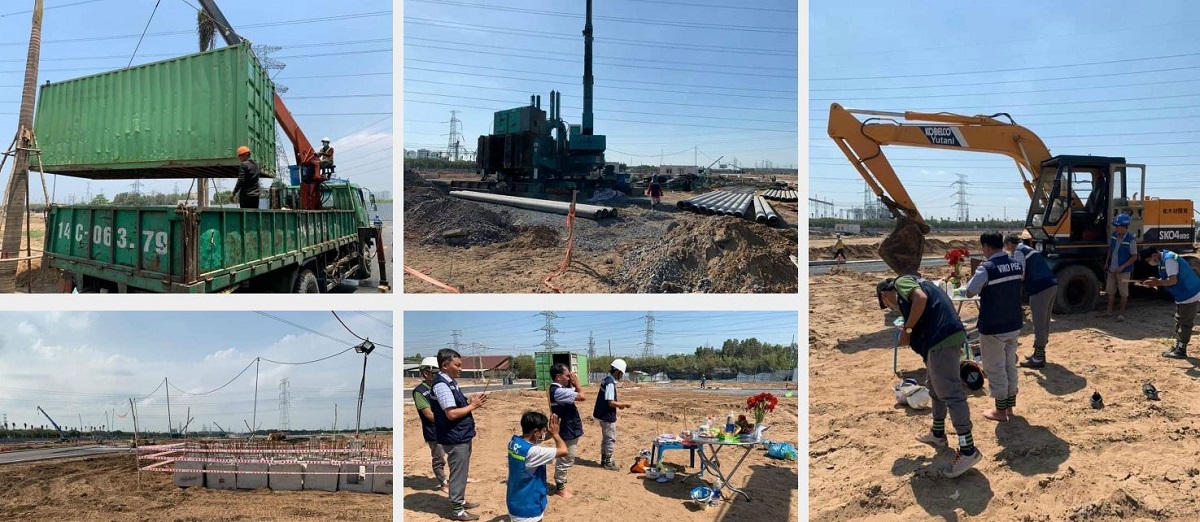
According to planning expert Nguyen Dinh Cung, the synchronous site elevation across the entire area is a prerequisite condition for "green" to truly have long-term value.
2. Drainage System and Regulating Lakes
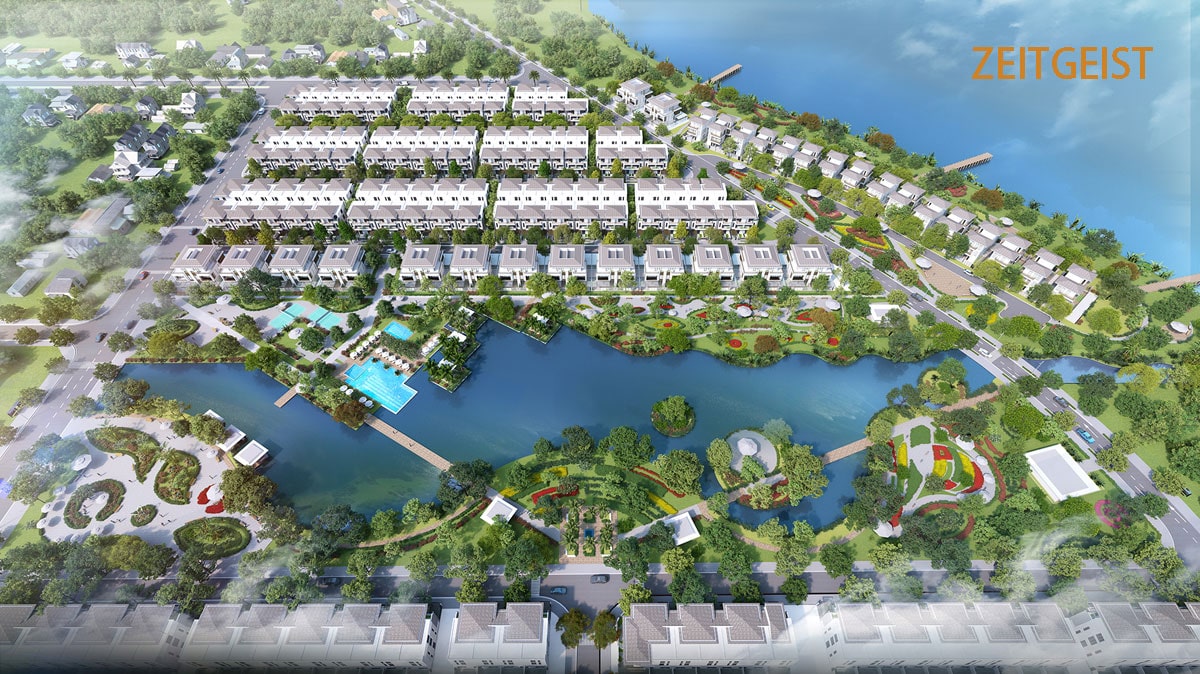
Zeitgeist is planned with three main regulating lakes, totaling over 40 hectares of water surface, serving as a water collection – rain storage – slow discharge system.
The main sewer system, with a diameter of $1.2–1.5$m, connects to the Rach Dia Canal and Phu Xuan River, allowing for two-way drainage – meaning it drains rainwater while preventing backflow during high tides.
(Image insert here: Central regulating lake combined with park – illustrating the project's smart water infrastructure solution)
The “Smart Drainage” technology applied by GS E&C allows for automatic control of lake water levels via rain and pressure sensors, helping the project avoid localized flooding – a problem many new urban areas in HCMC have faced.
This is the boundary between "cosmetic green" and "technical green" – the factor that determines true sustainability.
Greenery and Water Surface: Dual Impact on Urban Microclimate
Beyond their aesthetic role, the greenery and water surfaces at Zeitgeist City are strategically planned to reduce the urban heat island effect.
According to the design report by SWA Group (Singapore), green patches along the streets can reduce thermal radiation by $30\%$, while the regulating lakes help maintain air humidity at $65–70\%$ – the ideal level for a tropical area.
However, maintaining green spaces is much more costly than building them: maintenance costs, irrigation systems, lake water treatment.
If the developer or management unit does not commit long-term budget, the “green urban area” can easily fade after only a few years of operation.
Home Buyer's Environmental Checklist – Is “Green” “Sustainable” Enough?
For homebuyers, evaluating the "green" criterion needs to go beyond counting the number of trees in a brochure. A sustainable urban area must satisfy at least 4 practical criteria:
-
Minimum site elevation of $+3$m and an independent anti-tide system.
-
Greenery and water surface area ratio $\ge 35\%$, maintained in reality (not just on paper).
-
Regulating lakes and two-way drainage system, with automatic regulation capability.
-
Clear long-term operating mechanism – with an environmental maintenance fund and periodic upkeep plan.
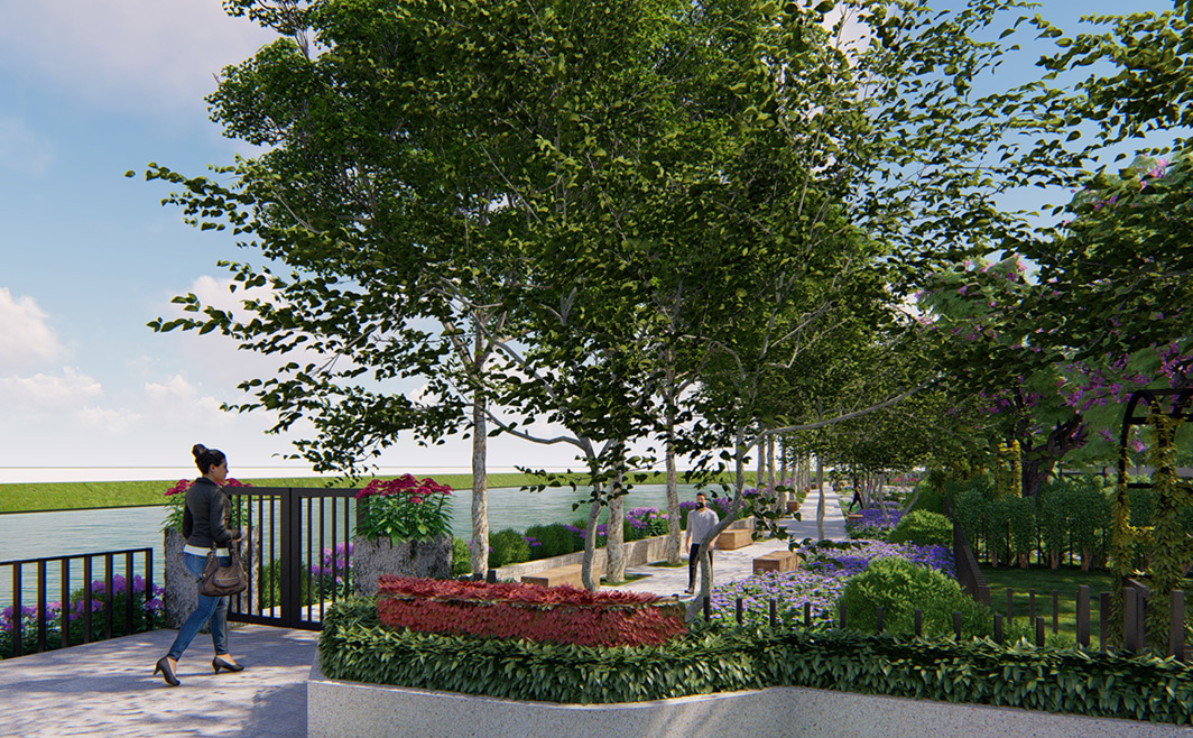
With these factors, Zeitgeist City is approaching the "sustainable urban" standard more closely than many projects in the same area. However, the real challenge lies in long-term operation – where "green" must go hand-in-hand with "sustainable," not just stop at the initial lawns and lakes.
Ngô Trung Hiếu – Lead Consulting Specialist
📱 Hotline/Zalo: 0837977978
🌐 Website: batdongsanhochiminh.com.vn
📍 Consulting Office: 22 - 24 Street No. 5, Sala Urban Area, Mai Chi Tho, An Khanh Ward, HCMC


