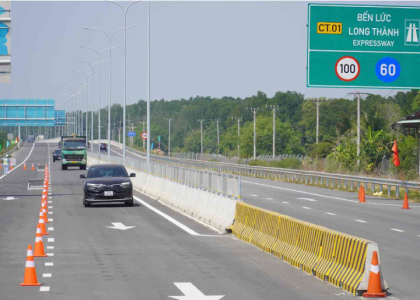
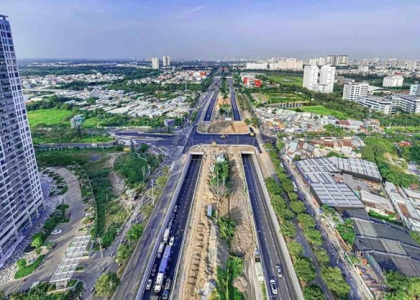
Zeitgeist City and the Infrastructure Boost from Ho Chi Minh City Ring Road 3
In the development cycle of real estate, transportation infrastructure is always the most influential variable affecting price growth margins. Zeitgeist City is facing a rare opportunity as Ho Chi Minh City Ring Road 3 – a national key project targeted for full operation by 2026 – gradually completes regional connectivity and creates a “bypass” capacity to avoid the urban core in the southern area. As through-traffic is redirected away from the city center, the Nha Be/Hiep Phuoc area is emerging as a new hub for logistics – seaports – industry – and urban development, thereby increasing residential and investment asset values.
This article analyzes from the perspective of “infrastructure-driven value”: why Ring Road 3 (Nha Be/Hiep Phuoc direction) serves as a direct leverage point for regional connectivity in the southern area, and how Zeitgeist City can benefit.
Ho Chi Minh City Ring Road 3 toward Nha Be/Hiep Phuoc: A New Axis for Regional Connectivity
Ring Road 3 is a strategic beltway passing through Ho Chi Minh City, Binh Duong, Dong Nai, and Long An, serving as the “backbone” of regional transportation. The significance of the Nha Be/Hiep Phuoc direction lies in its multi-layer connectivity: creating a bypass for transit vehicles, facilitating cargo flows to port clusters, and stimulating satellite urban growth.
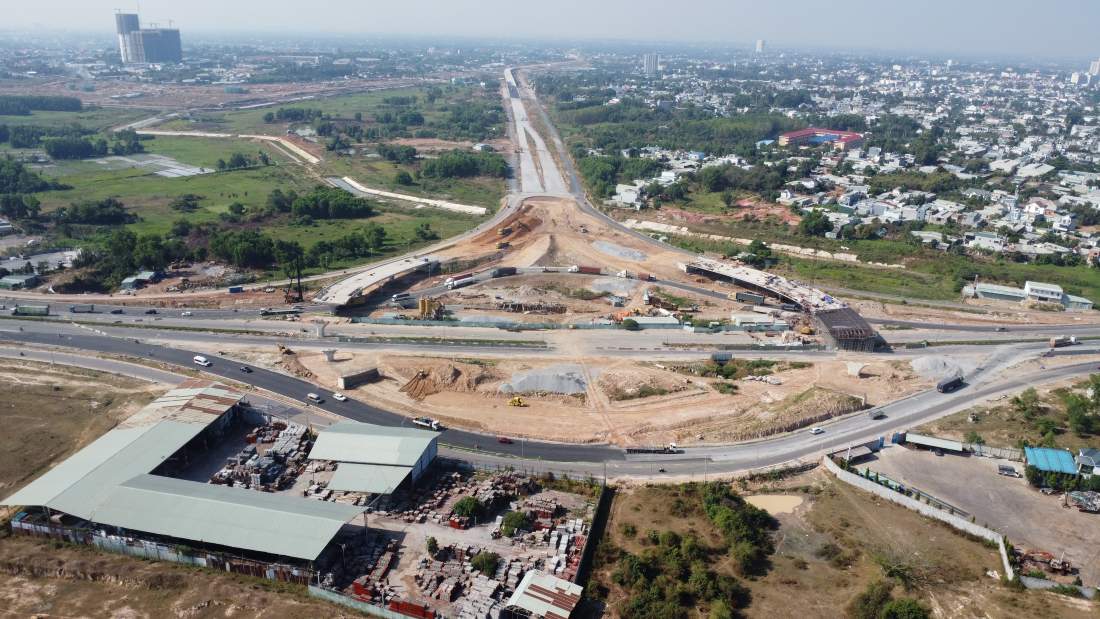
1) Enhancing “Bypass” Capacity – Reducing Pressure on the Urban Core
When ring road corridors become operational, a significant portion of trucks, container vehicles, and interprovincial traffic can choose the outer route instead of passing through the center. This typically delivers two major benefits:
-
Reducing pressure on inner-city corridors and congestion hotspots.
-
Improving commuting experiences and enhancing quality of life in satellite urban areas.
2) Opening a Logistics – Seaport Corridor for the Southern Area
The Nha Be/Hiep Phuoc direction is closely linked to the seaport ecosystem and spaces for industrial and logistics service development. As connectivity improves, the area can attract more businesses, experts, and skilled labor, creating sustainable housing demand.
3) Repositioning the Southern Area in Ho Chi Minh City’s Development Map
Instead of focusing entirely on the District 1–District 4 core, the city is shifting growth momentum toward new development poles along major infrastructure corridors. The more “open” the infrastructure becomes, the more new destinations for living and long-term investment emerge.
Zeitgeist City: Advantages as Infrastructure Accelerates Toward 2026
In a context where infrastructure is a measure of market confidence, projects that directly benefit from regional connectivity corridors often achieve stronger price growth margins. Zeitgeist City stands out for its timely “wave-catching” story: as the full operation target of Ring Road 3 approaches, the market increasingly reflects growth expectations in asset values.
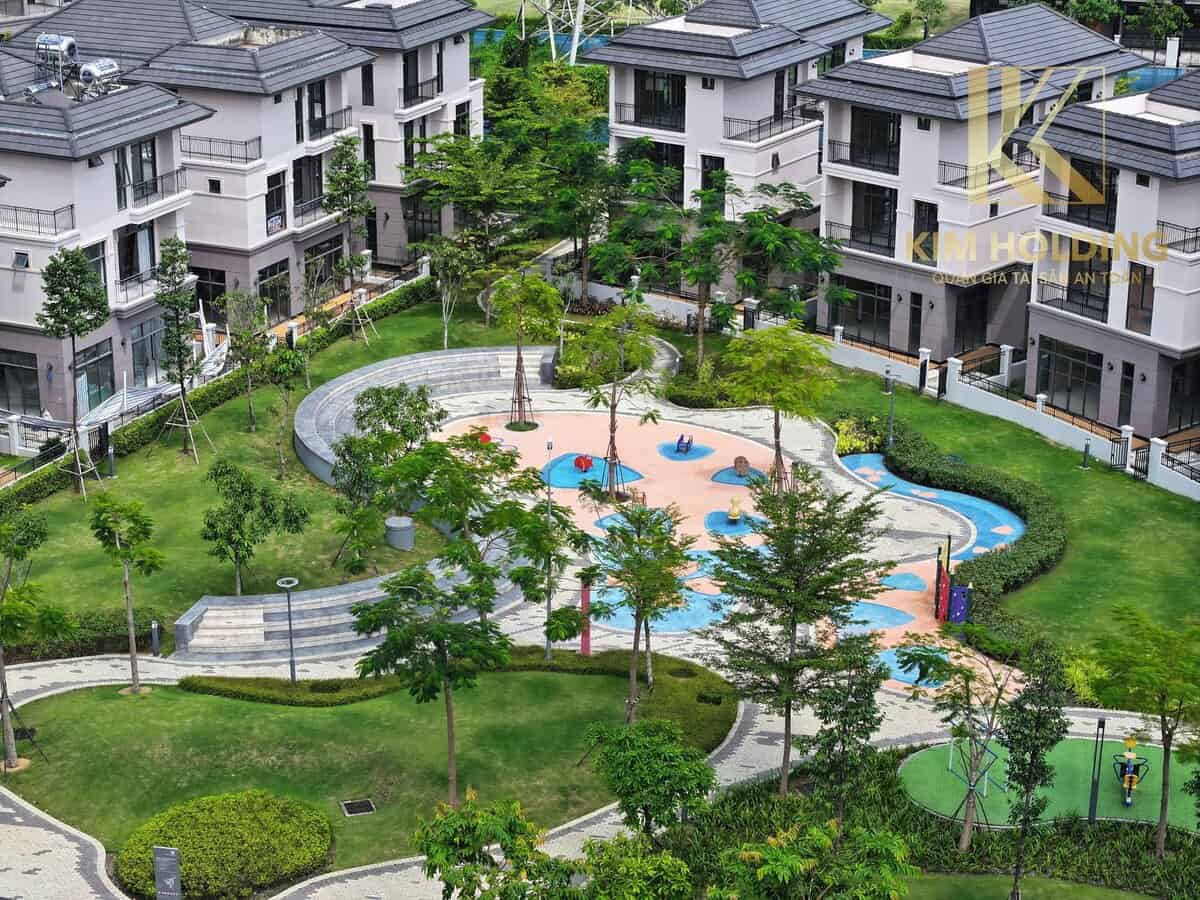
Zeitgeist City Benefits Across Three Value Layers
(1) “Mobility” Value Layer: More Convenient Connectivity
With additional route options and reduced dependence on central corridors, travel time tends to become more stable. For end-users, this is a decisive factor: smoother commuting for work, school, and services with lower congestion risk.
(2) “Economic” Value Layer: Job and Service Flows Moving South
Accelerated logistics and seaport infrastructure typically generates demand for:
-
Housing for experts, managers, and technical professionals,
-
Apartments/townhouses serving residents working near industrial zones and ports,
-
Supporting commercial and service activities.
As user demand increases, rental values and liquidity potential typically improve.
(3) “Asset” Value Layer: Market Expectations + Selective Supply
The real estate market often reacts along the “expectation curve” of infrastructure: clear information – strong construction progress – preparation for operation are phases when capital interest intensifies. With a clear connectivity narrative, Zeitgeist City has the foundation to build pricing advantages over time.
Why Does Ring Road 3 Toward Nha Be/Hiep Phuoc Drive Real Estate Growth?
1) Improved Regional Connectivity → Expanded Living Radius
As regional connectivity improves, buyers’ “living radius” expands. Many residents are willing to live farther from the urban core in exchange for better environments and more reasonable housing supply, provided connectivity remains convenient and stable.
2) Formation of New Urban – Service Clusters
Ring roads typically stimulate the development of:
-
Major interchanges,
-
Commercial and logistics clusters,
-
New urban areas,
-
Resident-driven service amenities.
This forms the foundation for new “value zones” instead of relying solely on the existing city center.
3) Stronger Long-Term Investment Appeal
A national infrastructure project with a clear operation timeline strengthens long-term investor confidence. As legal, planning, and connectivity factors become clearer, capital flows tend to prioritize projects that genuinely benefit from infrastructure advantages rather than short-term speculation.
Living and Investment Strategies at Zeitgeist City Based on the “Infrastructure Cycle”
For End-Users
-
Prioritize functional layouts that optimize daily commuting experiences.
-
Evaluate internal amenities and access to key transport corridors.
For Medium- to Long-Term Investors
-
Focus on products with strong rental potential (targeting experts and professionals).
-
Adopt a 24–48 month holding strategy to benefit from the infrastructure completion and operation phase.
For Liquidity-Oriented Investors
-
Choose property types with a broad buyer pool and easy transferability.
-
Closely monitor construction progress and major interchanges to determine optimal exit timing.
Zeitgeist City and the Story of “Value Growth Through Regional Connectivity”
Ho Chi Minh City Ring Road 3 toward Nha Be/Hiep Phuoc is not merely a transport route, but a structural component that enhances the southern area’s bypass capacity, expands the logistics–seaport corridor, and redefines its regional connectivity role. As the 2026 full-operation milestone approaches, projects directly benefiting from this infrastructure wave are positioned for clearer value appreciation. Within this context, Zeitgeist City stands as a compelling option for both residential buyers and medium- to long-term investors, aligned with infrastructure momentum and urban spatial shifts.
NGO TRUNG HIEU – SENIOR SALES CONSULTANT
📍 22–24 Street No. 5, Sala Urban Area, Ho Chi Minh City
📞 Call now: 0837 977 978